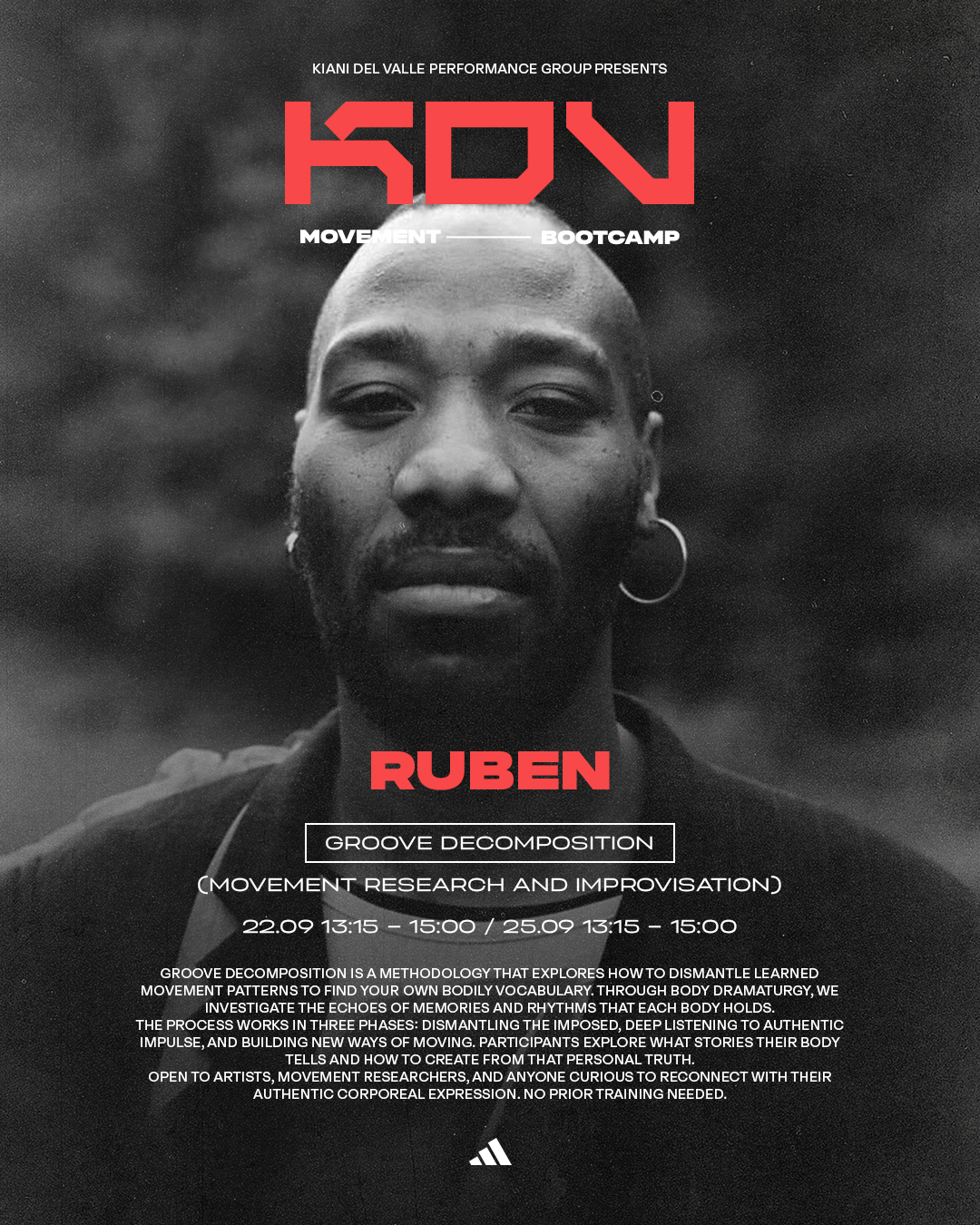
Groove Decomposition is a somatic research practice developed over six years that investigates how groove is culturally coded and how movement patterns become stereotyped through repetition, institutions, and social expectation. Rather than reproducing recognizable styles, the practice questions whether groove is something learned or something generated from within. What happens when we access the vibration that creates groove instead of copying its cultural form? Through processes of dismantling, deep listening, and reconstruction, participants deterritorialize imposed movement patterns and develop an authentic bodily vocabulary rooted in their own somatic truth. Groove is approached not as a fixed style, but as a living impulse — not the recovery of something lost, but the creation of something new from its original source. Open to artists, movement researchers, and anyone interested in corporeal decolonization. No prior dance training required.
ECHOES THROUGH GROOVE DECOMPOSITION
This lab applies Groove Decomposition to character creation. How do we build from the liberated body? What narratives emerge when we stop moving the way we're "supposed to"?
I integrate Stanislavskian techniques—circle of attention, intentional action—but applied to a body that no longer automatically obeys external mandates. We deterritorialize imposed patterns, create authentic body vocabulary, and build characters from that physical truth.
It's not just deconstructing for the sake of it. It's discovering what emerges when the body frees itself from automatisms and creating characters that breathe with their own truth
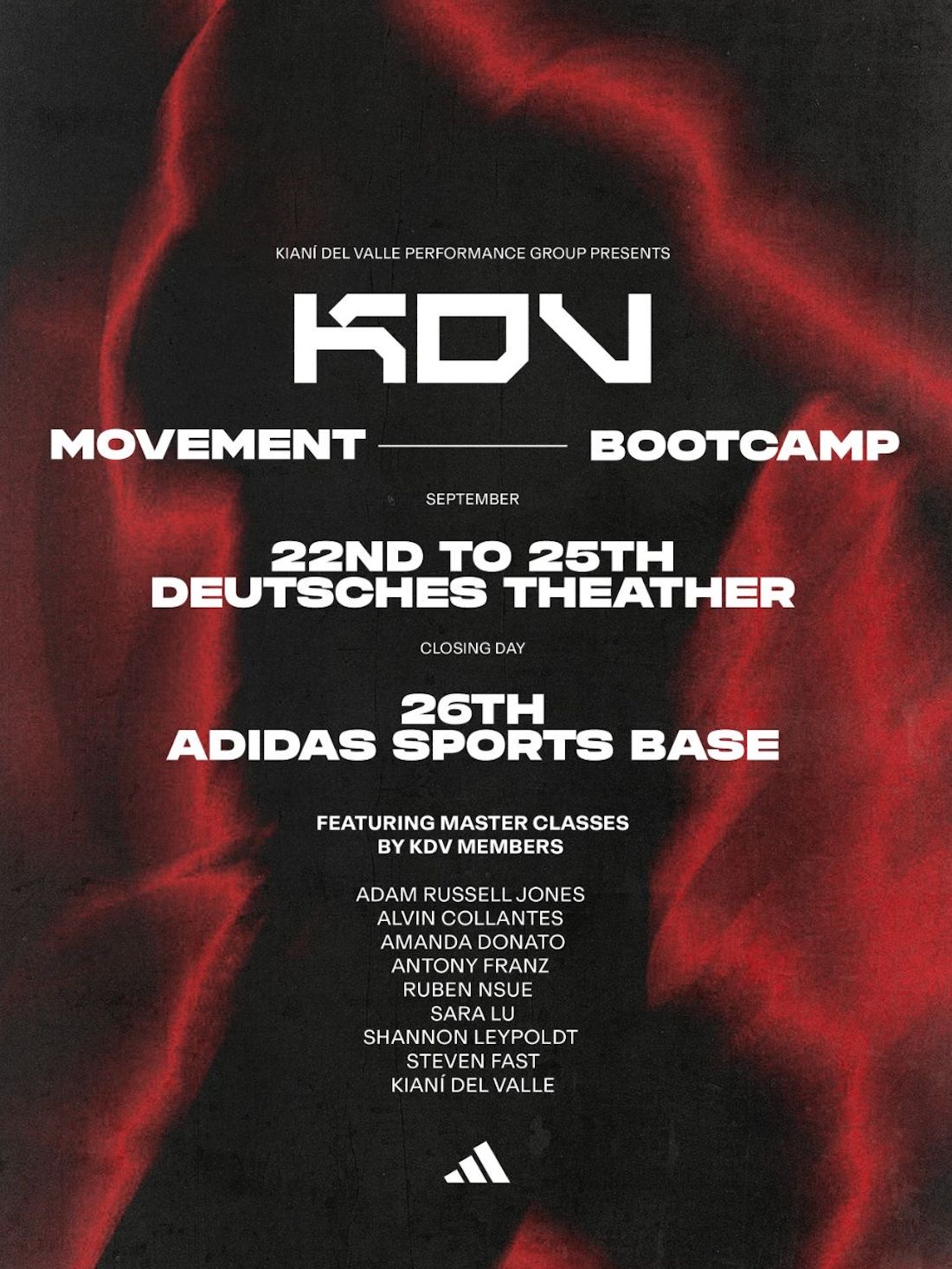
KDV - BOOTCAMP
01.
This research series documents my personal search process: the decolonization of learned body patterns and the development of my own language.
My starting point is the aesthetic corrections I experienced during my training in different techniques. Those bodily and aesthetic manipulations that transformed my body in ways that weren't mine.
This investigation is born from error, from what "shouldn't be." Through vibration and the source that comes from the groove, I transform those conditionings into authentic vocabulary.
In this gallery I expose how groove becomes narrative, how my own technique emerges from deconstruction, and how all of this transforms into concepts and new ways of storytelling from the liberated body.
01.a
¨EN DEHORS¨
This corporal investigation uses the classical ballet technique "en dehors" as a deconstruction device. I literally play with this codified position to represent bodily conflict and the tension between my two worlds: traditional technique and contemporary expression.
Through the decomposition of "en dehors," I explore the search for my own voice as a Black man within historically exclusive techniques. The piece examines how classical codifications can be re-territorialized from specific identity perspectives.
The investigation operates from embodied practice, where the body functions as both subject of study and analytical instrument, seeking an authentic artistic voice that transcends the binary limitations between tradition and rupture
01.b
¨LIVING ARCHIVE¨
This improvisation with jazz trumpet music explores nostalgia as a vehicle for bodily memory. Through vibration and spasm, I seek to connect with a frequency that emerges from the past.
The trumpet functions as a sonic symbol of events in the settlements, that specific vibration that crosses generations. In the context of a Berlin ballroom, my Black body becomes a living archive, recreating memories that are not only personal but collective.
The investigation uses the Source of groove as ancestral movement, where each bodily vibration attempts to recover echoes of past experiences. The body operates as a memory device, channeling through spasm and improvisation a temporal connection that transcends the immediate present.
01.c
¨UNCERTAINTY¨
This improvisation represents the inherent conflict in the process of bodily liberation. The movements oscillate between organic freedom and learned restriction: a vibration that seeks to emerge but is interrupted by the limitations of my own conditioned vocabulary.
The piece embodies the tension between the robotic—what is expected of me, what I "should be" as a Black body—and the ancestral that guides me toward authenticity. Each fragmented movement evidences this internal struggle: the soul in conflict between external expectations and the cultural memory of my ancestors.
The investigation explores that liminal zone where liberation is not an achieved state, but a fragmented process, full of internal resistances and moments of authentic connection that emerge and withdraw in the search for genuine expression.